Gallery 4
Social Impact Arts Prize Residency & Fellowship
13 December 2025 - 1 March 2026
Social Impact Arts Prize Residency ’22
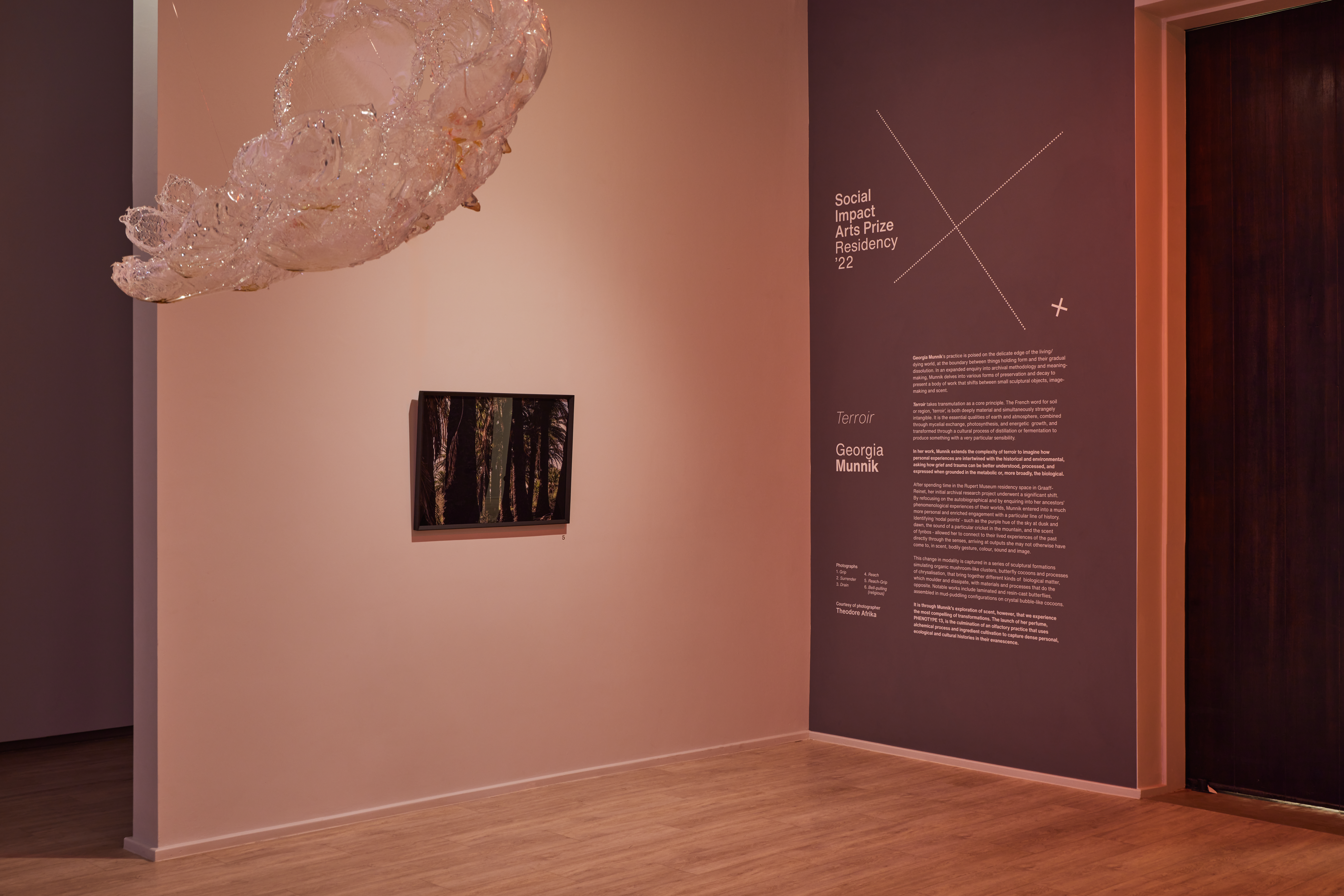
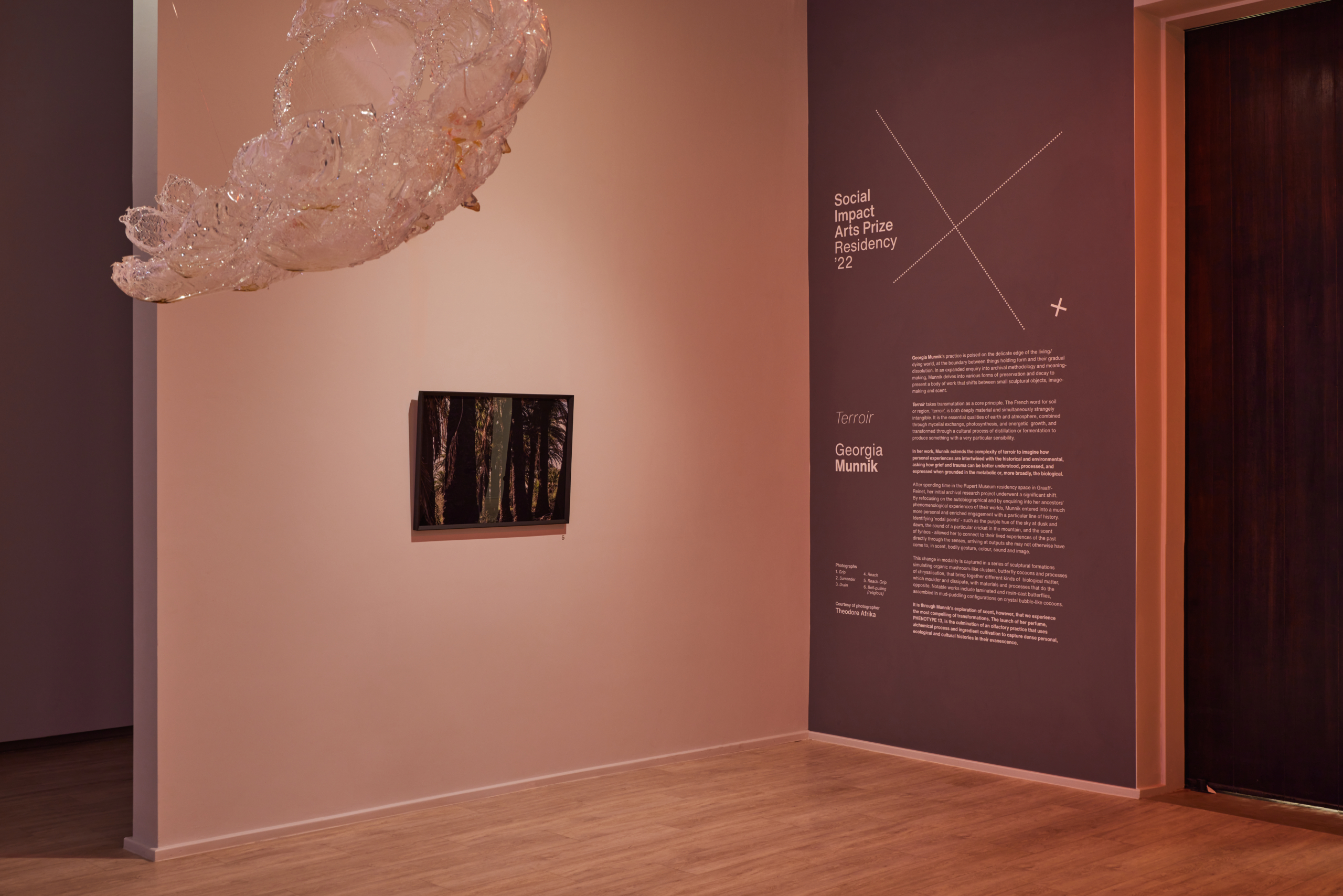
Georgia Munnik’s practice is poised on the delicate edge of the living/dying world, at the boundary between things holding form and their gradual dissolution. In an expanded enquiry into archival methodology and meaning-making, Munnik delves into various forms of preservation and decay to present a body of work that shifts between small sculptural objects, image-making and scent.
Terroir takes transmutation as a core principle. The French word for soil or region, ‘terroir’, is both deeply material and simultaneously strangely intangible. It is the essential qualities of earth and atmosphere, combined through mycelial exchange, photosynthesis, and energetic growth, and transformed through a cultural process of distillation or fermentation to produce something with a very particular sensibility.
In her work, Munnik extends the complexity of terroir to imagine how personal experiences are intertwined with the historical and environmental, asking how grief and trauma can be better understood, processed, and expressed when grounded in the metabolic or, more broadly, the biological.
After spending time in the Rupert Museum residency space in Graaff-Reinet, her initial archival research project underwent a significant shift. By refocusing on the autobiographical and by enquiring into her ancestors’ phenomenological experiences of their worlds, Munnik entered into a much more personal and enriched engagement with a particular line of history. Identifying ‘nodal points’ – such as the purple hue of the sky at dusk and dawn, the sound of a particular cricket in the mountain, and the scent of fynbos – allowed her to connect to their lived experiences of the past directly through the senses, arriving at outputs she may not otherwise have come to, in scent, bodily gesture, colour, sound and image.
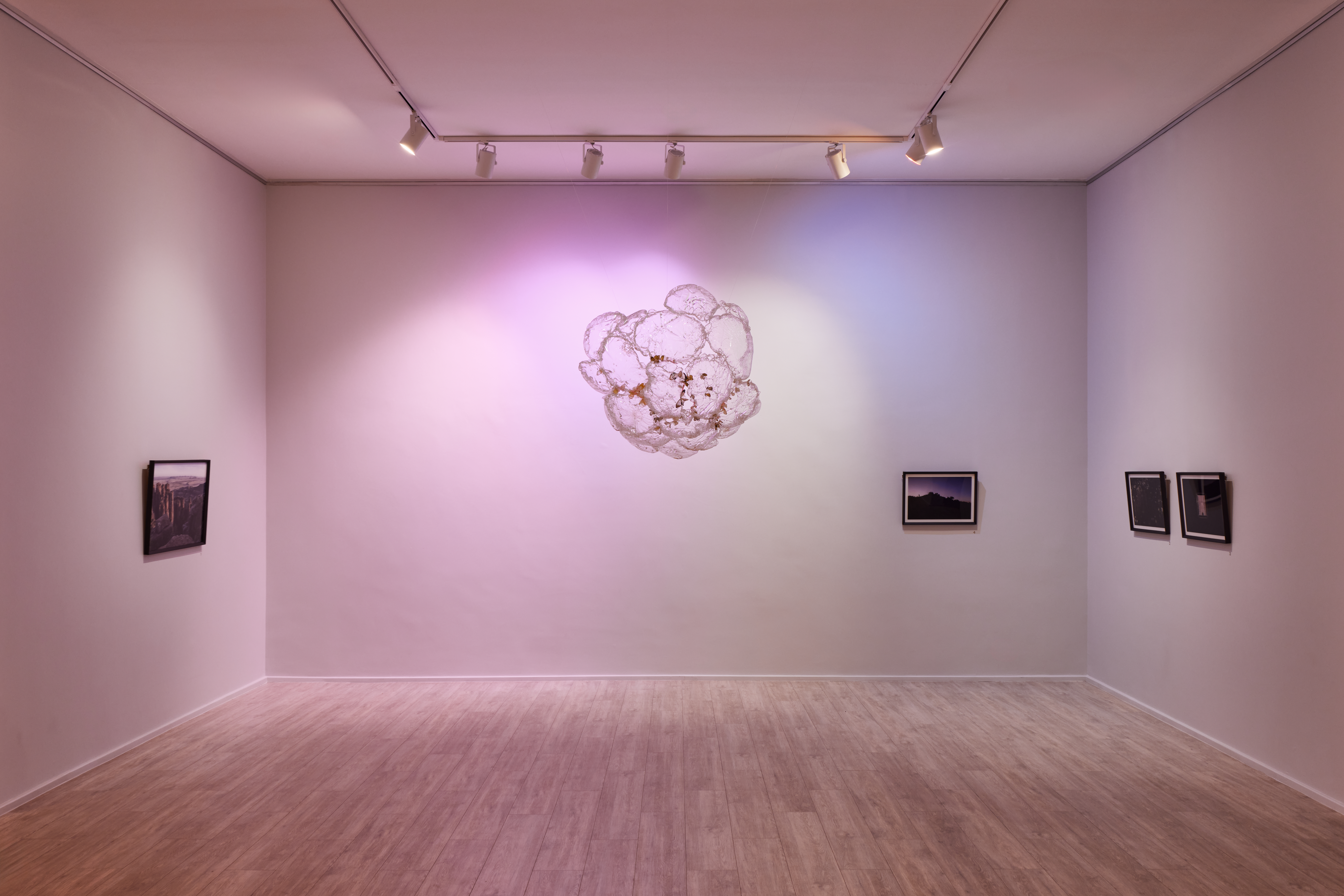
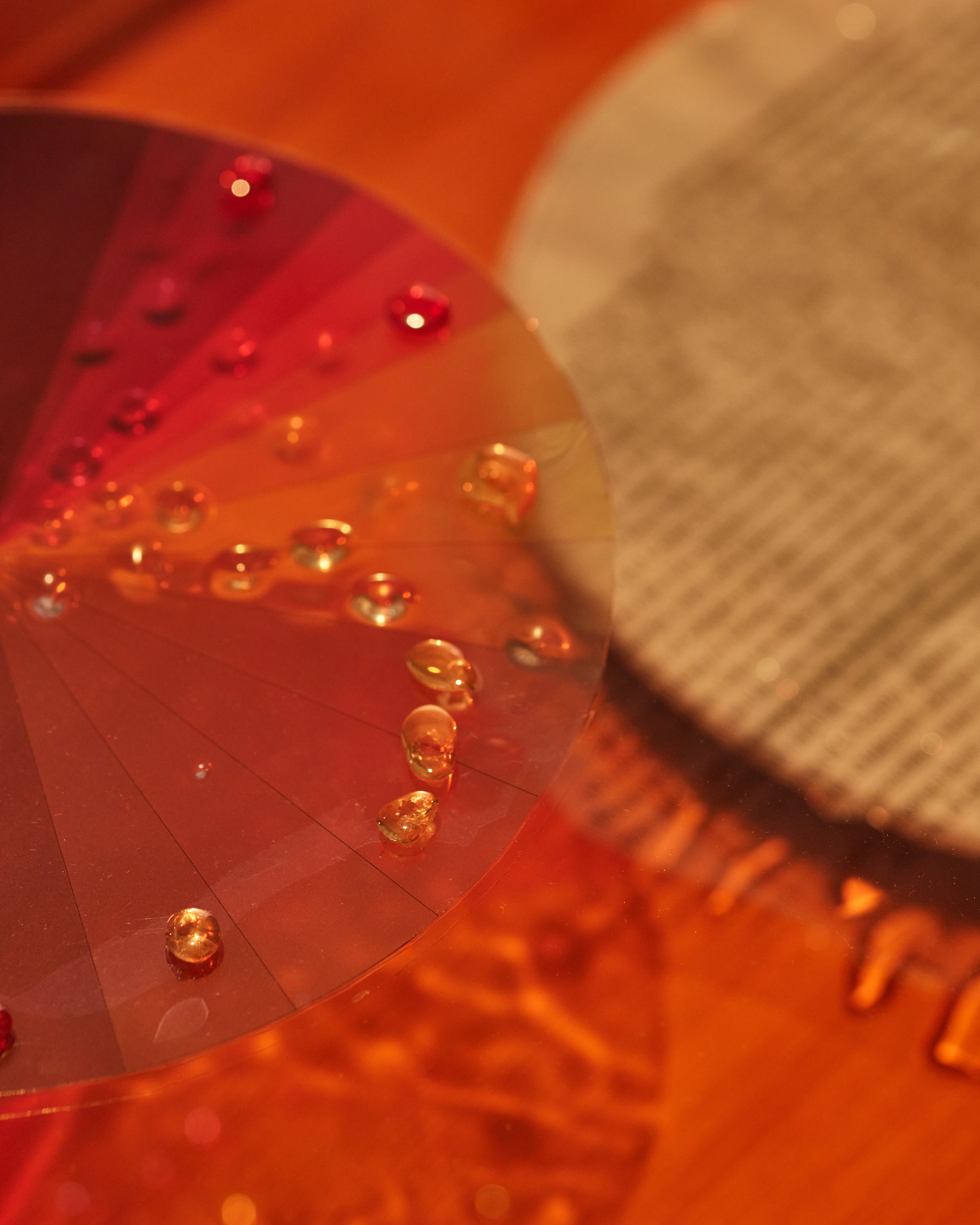
This change in modality is captured in a series of sculptural formations simulating organic mushroom-like clusters, butterfly cocoons and processes of chrysalisation, that bring together different kinds of biological matter, which moulder and dissipate, with materials and processes that do the opposite. Notable works include laminated and resin-cast butterflies, assembled in mud-puddling configurations on crystal bubble-like cocoons.
It is through Munnik’s exploration of scent, however, that we experience the most compelling of transformations. The launch of her perfume, PHENOTYPE 13, is the culmination of an olfactory practice that uses alchemical process and ingredient cultivation to capture dense personal, ecological and cultural histories in their evanescence.
Social Impact Arts Prize Fellowship ’22
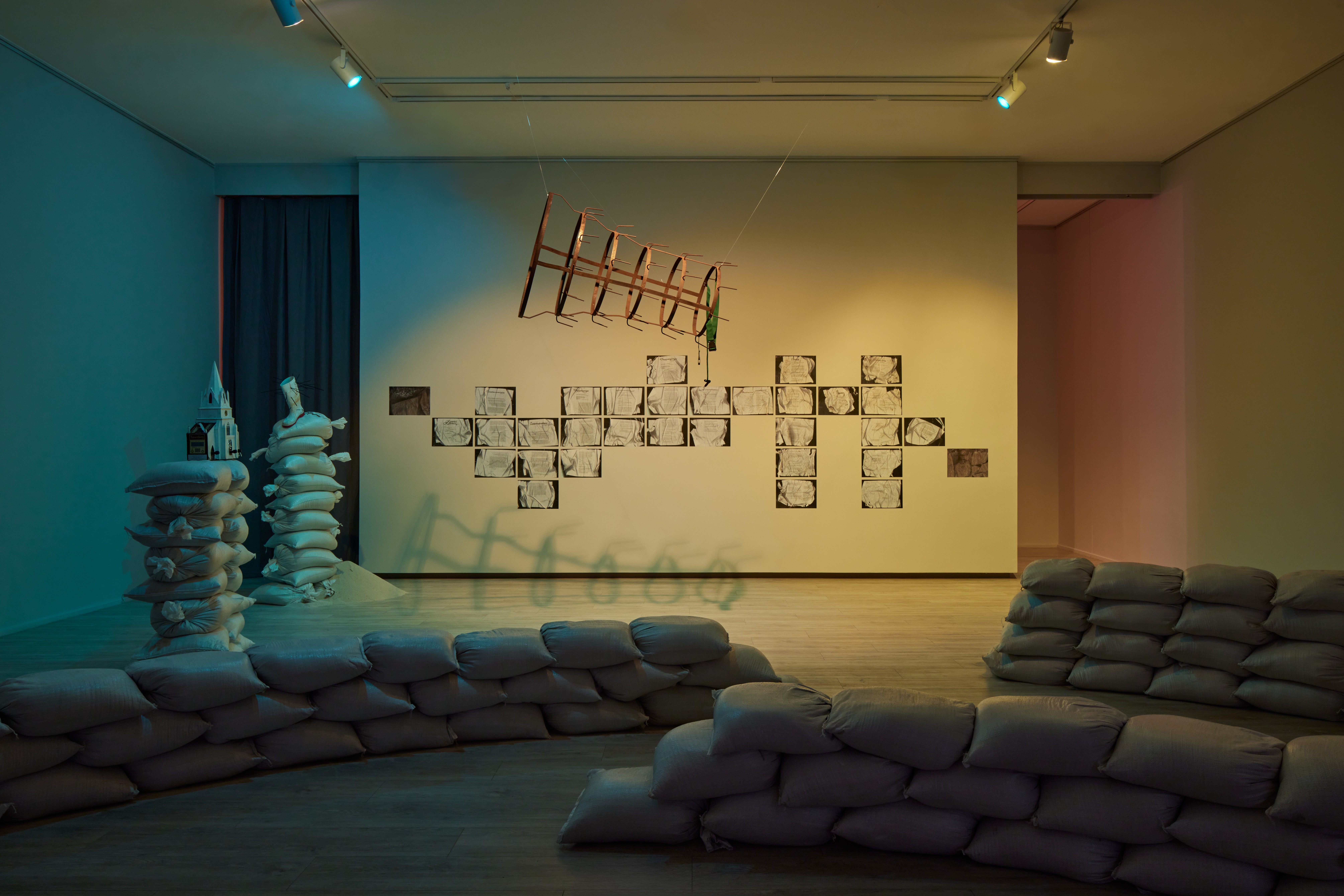
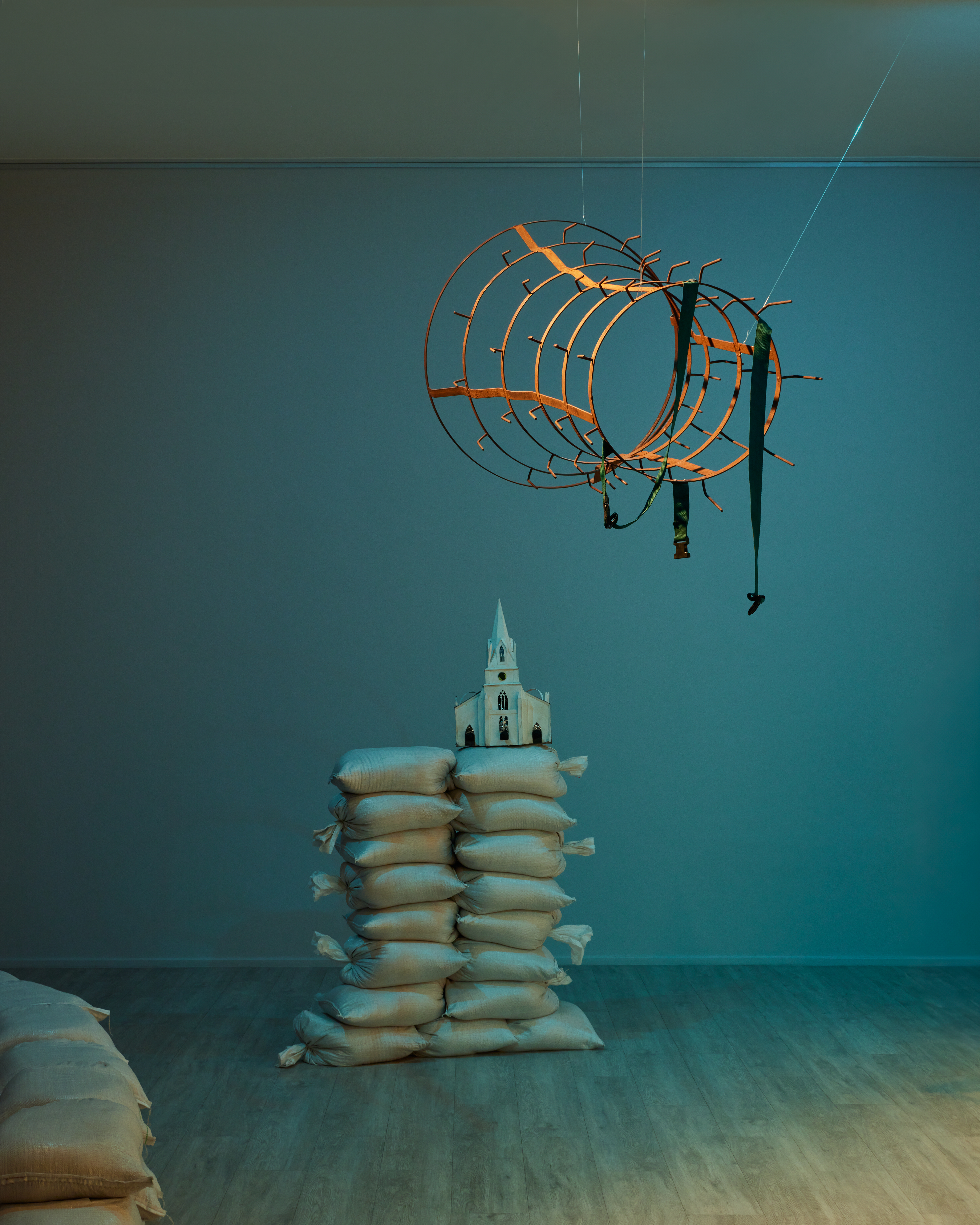
Abri de Swardt is a transdisciplinary artist working primarily with performance, photography and the moving image. His exhibition, Kammakamma, brings together a range of different media and methodologies, including historical research, site-specific engagement, poetic and fictional texts, scriptwriting, videography, sound design and installation. Focussed on the Eerste River, from its many sources in the hills surrounding Stellenbosch, to the sea at Macassar beach, De Swardt asks a critical question: If the river’s mouth could speak, what would it say?
Kammakamma is the second of three films that positions the river as witness to and carrier of multiple submerged narratives. In imagining the river as capable of speech, De Swardt draws into being an understanding of the more-than-human world as neither passive nor inert, but vibrant, animate and agential, and in this instance, polyvocal.
Written in collaboration with poet and novelist Ronelda S. Kamfer, and historian Dr Saarah Jappie, each part of the film is temporally and spatially distinct, situating its protagonists at a point of confluence within the flux and flow of personal, historical and environmental forces. In the opening iteration of Kammakamma we meet Hendrik Biebouw, a wayward teenager who, having attacked a VOC watermill on the Eerste River in 1707 along with three others, is recorded to have infamously protested his fate in the magistrate’s court, proclaiming himself an ‘Africaander’ – a term previously used only for enslaved and indigenous peoples.
Performed by Ben Albertyn, Biebouw appears in De Swardt’s film partially immersed, inebriated and adrift – a dubious configuration of one of Afrikanerdom’s founding myths. He struggles to find his footing, grasping at sandbags on the riverbank. His words are uncertain and in excess. They slip between Afrikaans, Dutch, German and Malagasy in a flood of tongues, drawing us into the title of the work, which combines the Khoekhoe word for water (‘//amma’) and similitude (‘khama’) to embody the river as a voluble medium that doubles, destabilises and dilutes.
Through the form of a synchronised two-channel projection, De Swardt plays upon the idea of ‘seeing double’, of states of intoxication and parallel temporalities, troubling our perceptual stability so that we, like Hendrik Biebouw, may become saturated with river stories.
Courtesy note:
Kammakamma’s development phases includes support from the Rupert Art Foundation, the National Arts Council of South Africa’s Presidential Employment Stimulus Programme, the World Weather Network, and production residencies at Gallery University Stellenbosch (GUS) and the Nirox Foundation.