Gallery 3
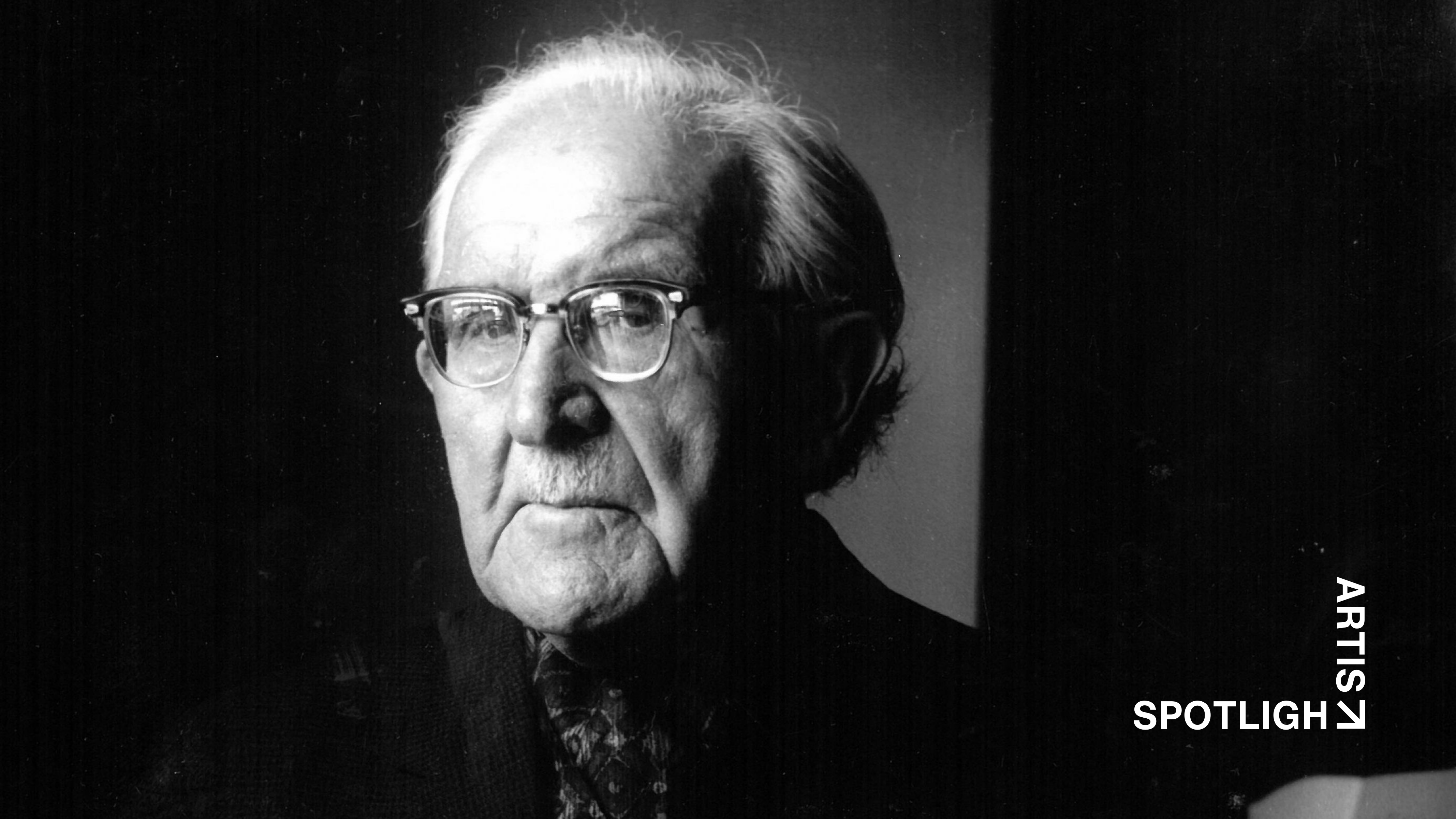
Artist Spotlight series – Pranas Domšaitis (1880-1965)
24 February 2026 - 19 April 2026
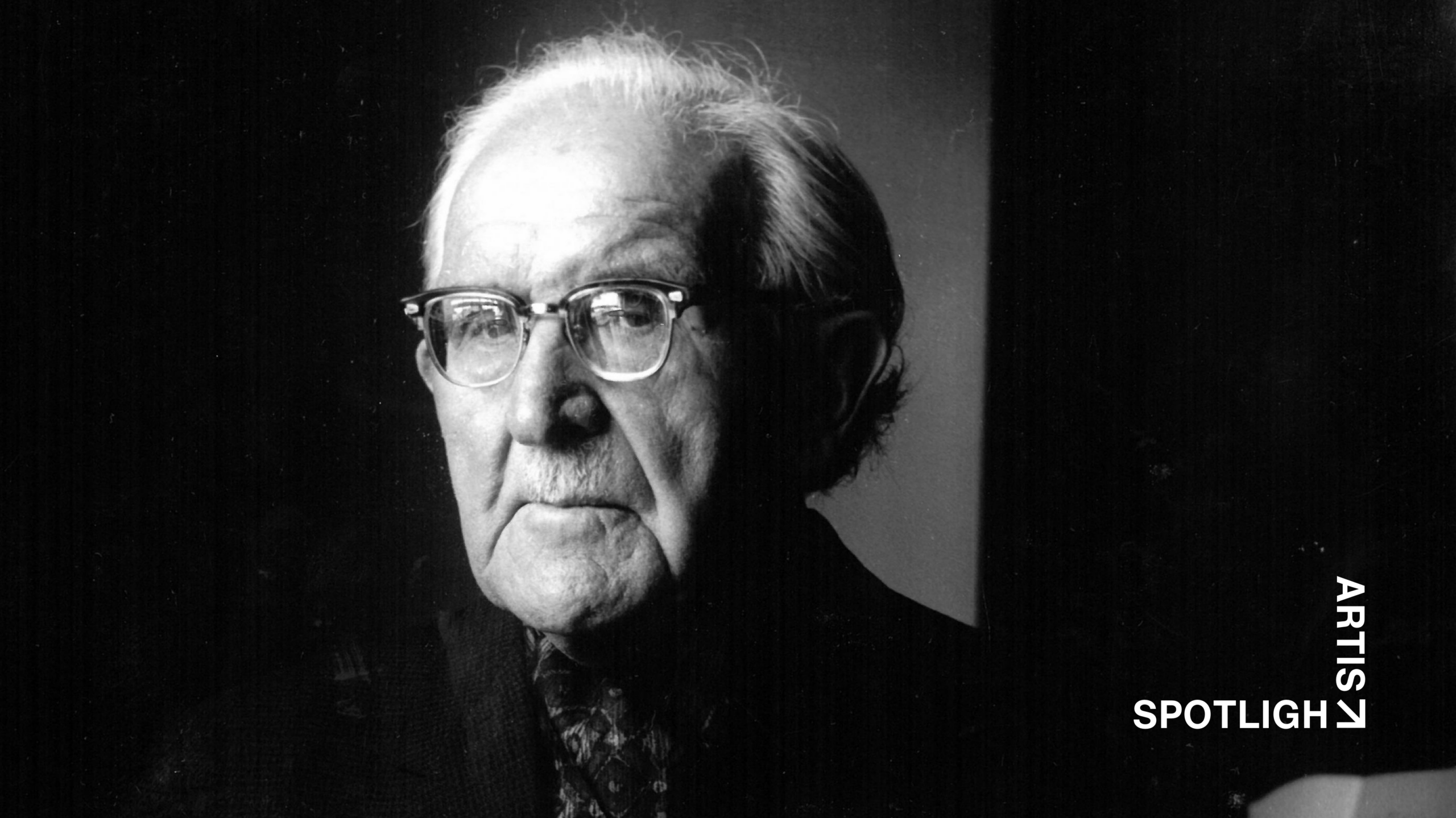
The collection comprises over 400 artists, and the Artist Spotlight series will highlight a select few in 2026, while incorporating archival materials and finds for viewers’ enjoyment.
*To view the works on display, click on the text in bold.
On 15 August 1880, Expressionist artist Pranas Domšaitis (or Franz Karl Domscheit) was born in the farmers’ hamlet of Kropinas, East Prussia (present-day Gajev, Russia). After a life of 85 years and a career of nearly 60 years, religion, the farm, and village environment remained strong influences and subjects in his art.
Lithuanian culture embodies characteristics and influences from both German and Russian cultures. Many folk traditions have been interchanged or have similar origins owing to cultural contact. As for Domšaitis’ roots, one can consider him a north-eastern European, with specific references and loyalty to Lithuanian peasant culture.
During 1919 to 1924, seen as the foundation of his career, his works emphasize the spiritual rather than the physical well-being of humankind. It’s within these years that the biblical themes of Annunciation, Adoration, Flight to Egypt (or other ‘flight’ themes), and Crucifixion become cornerstones of many works to follow, also taking inspiration of the work of Marc Chagall.
From 1925 to 1933, he travelled and exhibited through Hungary, Romania, the Balkans, and Turkey, creating travelogues. The pastel works of street scenes in small villages were direct interpretations of the characteristics of people and places, later serving as studies for paintings. It was also on these travels that he would become acquainted with other artists such as Edvard Munch, Emil Nolde, Paulus Auglus and Lovis Corinth.
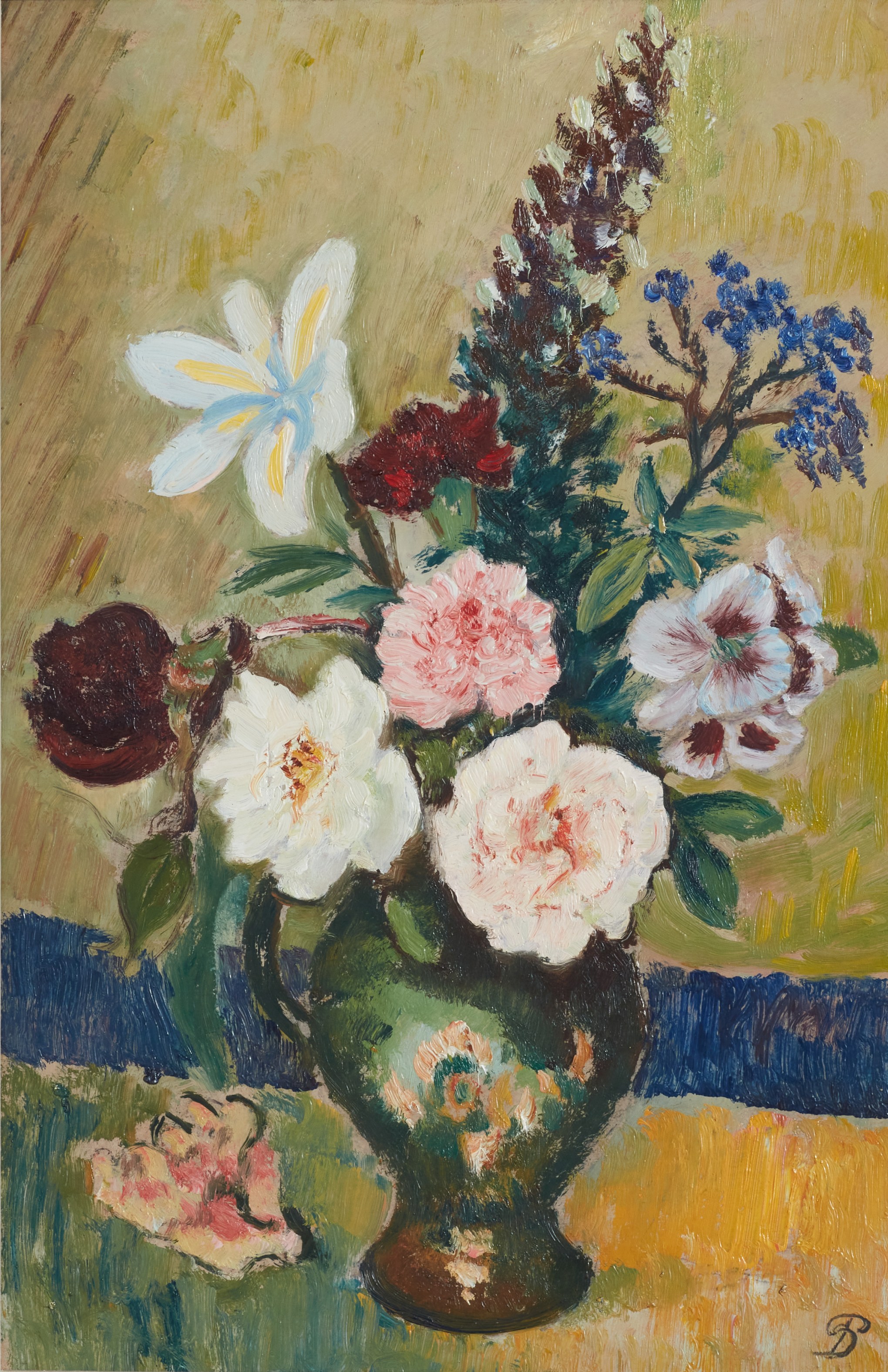
The ‘degenerate’ status of his art in Germany during 1935 led him to retreat into painting superficially representational pieces, such as flower pieces.
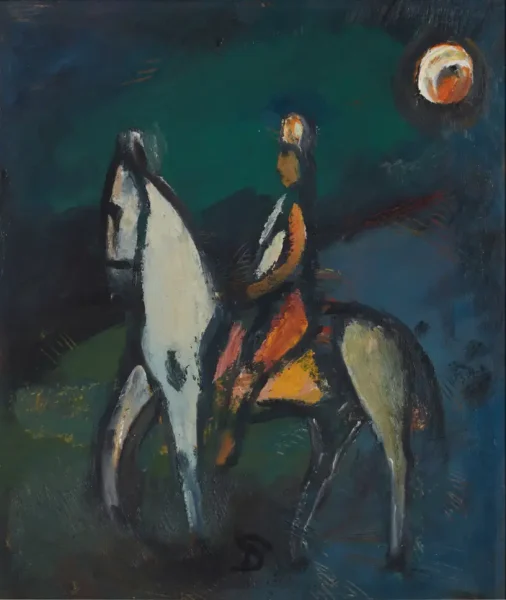
In 1949, he arrived in South Africa because his famed soprano wife, Adelaid Armhold, whom he met in 1924, was appointed Senior Lecturer in Singing at the University of Cape Town. The country in which he would live and work until his death presented its own typography and palette, but Domšaitis would constantly draw on his memories of Lithuania’s countryside, staying loyal to his upbringing and symbolic use of farm animals and horse riders. The rider truly symbolizes Domšaitis as the traveller and nomadic artist he was.
For most of the 1930s, rural settings and landscapes dominated in his work, and he was highly regarded as a landscape artist. Working in South Africa, his palette had to adapt to the new atmosphere and surroundings he found himself in. In the early stages, his works were merely studies, building up confidence and portraying characteristics of the new country he was in. Traveling widely through areas now known as the Karoo, Transkei or Wild Coast, Mpumalanga, and the Free State.
As a peak in his career, 1954 stands out, as he was recognized as a major post-war artist in South Africa, with works that are emotional and subjective to the purest degree. A decade later, he won the South African competition ‘Artists of Fame and Promise’ while also representing South Africa at the São Paulo Biennial in Brazil during 1963 with other artists like Carl Büchner, Walter Battiss, May Hillhouse, Alfred Krenz, Erik Laubscher, and Maurice van Essche, to name but a few.
As for the Rupert Art Foundation collection of 14 works, half were acquired from the commemorative exhibition held in 1967 at the South African National Gallery, Cape Town. The archival notes in this exhibition catalogue, that is on display, note pieces of interest that Armhold was not ready to part with – today these works form part of the over 600 pieces on permanent display in the Pranas Domšaitis Gallery of the Lithuanian National Museum of Art.