Gallery 3
Artist Spotlight series – Cecil Skotnes (1926 – 2009)
27 June 2026 - 13 September 2026
Skotnes was born in 1926 in East London (now KuGompo City) and raised in the Eastern Cape and Gauteng. At the age of 17, he served with the South African Artillery in Egypt and Italy, where he was first introduced to art. He developed a fascination with Greek mythology and Renaissance artists such as Masaccio, Giotto, and Donatello, influences that continued to shape his artistic practice for many years.
He graduated in Fine Arts from the University of the Witwatersrand, spent a brief period in London, and subsequently settled in Johannesburg before relocating to Cape Town in 1978. Although initially recognized for his painting, he later expanded his practice to include coloured wood panels, relief printing, print portfolios, murals, public commissions, ceramics, tapestries, and sculpture. Numerous murals were commissioned by the Roman Catholic Church across South Africa, while the tapestries were woven by Marguerite Stephens and occasionally in Aubusson, France.
Skotnes is highly regarded for his pioneering contributions to art education, particularly through his work as Cultural Officer at the Polly Street Centre in Johannesburg from 1952 to 1965. At this institution, he taught and mentored young black artists, a commitment he sustained throughout his career. In 2003 he was awarded The Order of Ikhamanga in Gold by the South African Government for his contribution to the de-racializing of South African art. Skotnes remained a fierce advocate for freedom of expression right up to his death in 2009.
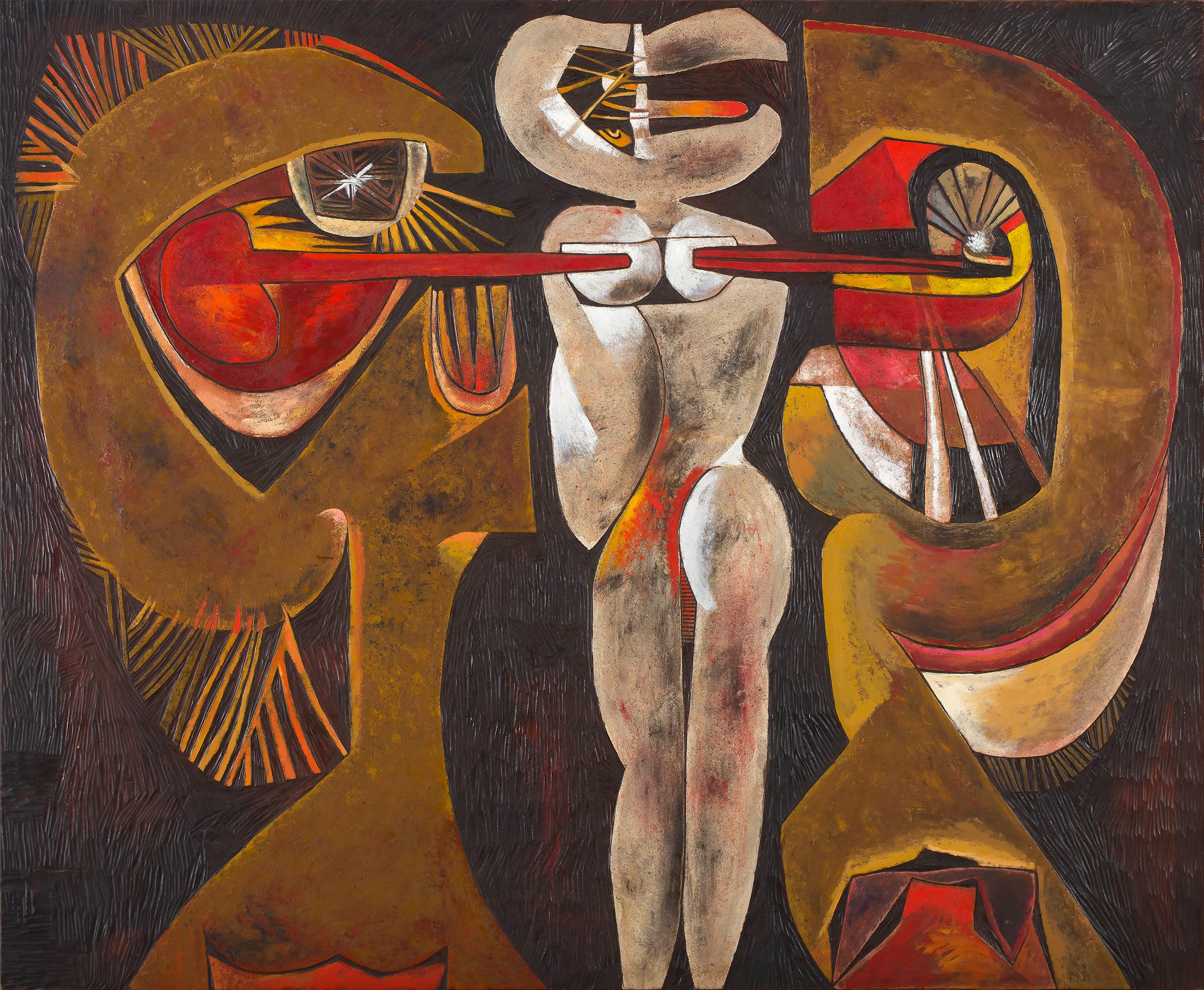
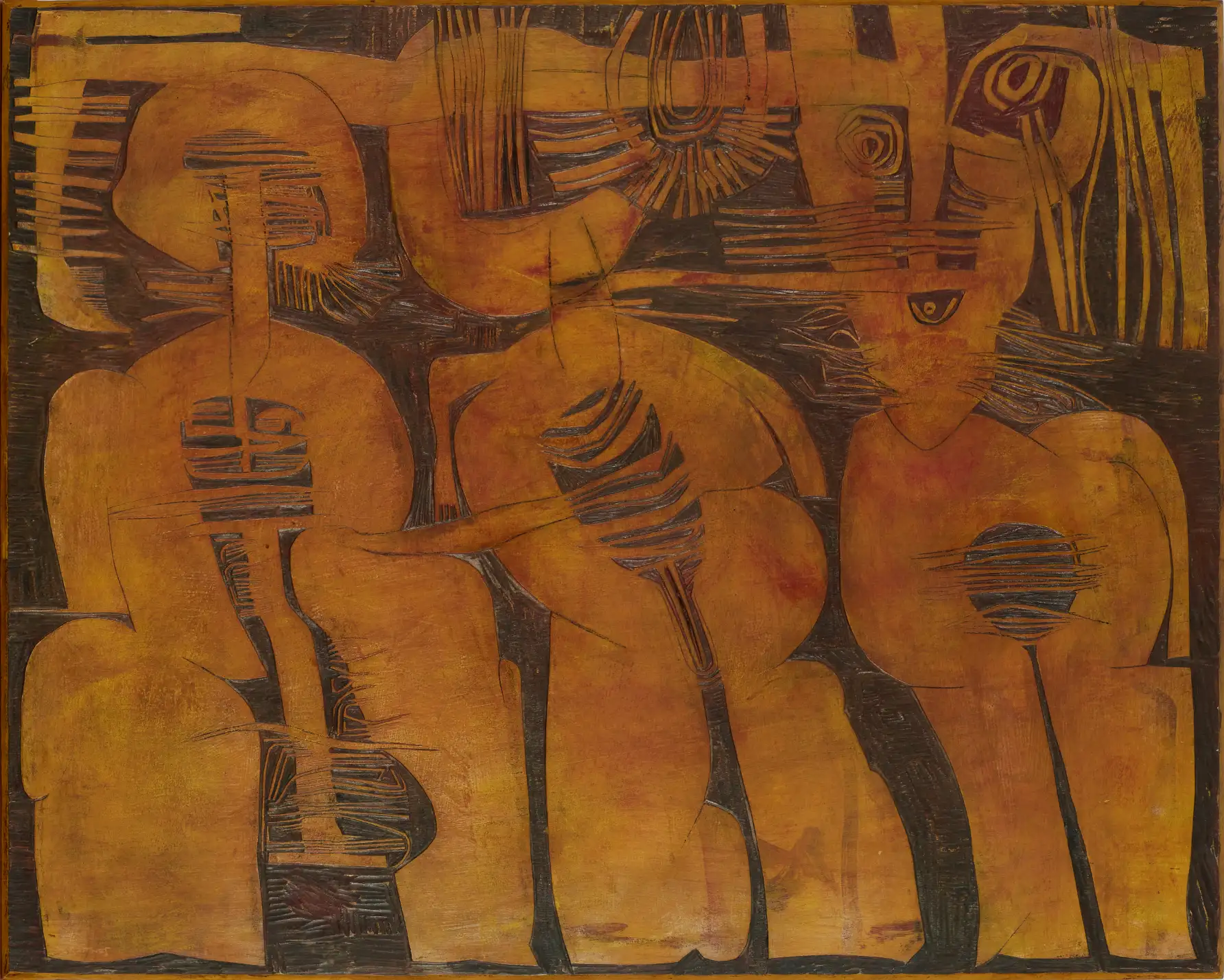
The artworks by Skotnes, part of the Rupert Art Foundation collection, feature evidence of his inspiration from the African landscape through powerful impressions and graphic works. Skotnes used only natural pigments for the carved marks on his hardwood panels. This palette is also used throughout his print portfolios and various book illustrations; the feature highlights a selection from the 1973 portfolio The Assassination of Shaka.
In 1957, Egon Guenther, a goldsmith and gallerist from Germany and a close associate in the art world, opened his gallery in Johannesburg. By 1963, a group of five artists who regularly visited Guenther’s home, filled with African art and inspiration, and exhibited at the gallery, formed the first interracial art collective, ‘The Amadlozi Group,’ in South Africa. Starting with an exhibition in Johannesburg, then traveling abroad to Italy for exhibitions in Rome, Florence, Venice, and Milan.
The original group members of The Amadlozi were Cecil Skotnes (1926–2009), Giuseppe Cattaneo (1929–2015), Cecily Sash (1924–2019), Sydney Kumalo (1935–1988), and Edoardo Villa (1915–2011). Later, three more artists, including Peter Haden (1939–1997), Hannes Harrs (1927–2006), and Ezrom Legae (1938–1999), joined the group and continued exhibiting together until 1970.
Even though the group’s artists never collaborated, keeping to their own individuality, various influences and guidance can be seen when viewing their work together. A small but powerful feature amongst Skotnes’ works attests to this. Their work made African Modernism and their identity prominent and visible. Their contribution lay at the intersection of African and European art and was invaluable in bringing the African continent, its land, history, culture, memory, and art to the foreground.