Gallery 3
Artist Spotlight series – Nita Spilhaus (1878 – 1967)
26 September 2026 - 13 December 2026
Spilhaus was born in Lisbon, Portugal, in 1878. Both parents passed away by the time she was a year old, and she was raised by her grandfather in Lübeck, Germany.
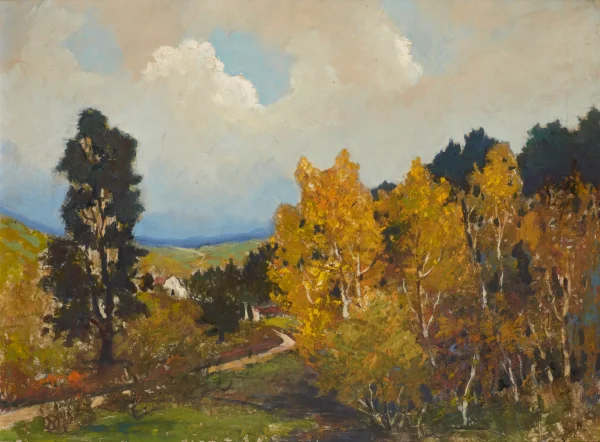
Beginning in 1895, Spilhaus pursued a decade of art studies, initially at the Lübeck School of Art and subsequently at several Munich studios that admitted both male and female students. She later continued her education in Dachau, a region renowned for its atmospheric landscapes. The moss-covered stumps, branches, dramatic clouds, and shifting light informed her expressive landscape paintings.
She held her first solo exhibition in Germany in 1900, while working on a folio of etchings depicting Lübeck. This period marked the beginning of her recognition as a graphic artist, guided by the accomplished printmaker Heinrich Wolff.
In 1908, Spilhaus relocated to Constantia in Cape Town. Although initially reserved, she gradually engaged with the local art community, receiving limited exposure for her work before joining the South African Society of Artists. During this era, her contemporaries produced intimate, Impressionistic works with clear European influences, and painting outdoors required adapting to the region’s unique atmosphere and light. From 1914 onward, she lived independently, first on Adderley Street and later in shared cottages on Keerom Street, frequently in the company of artists and writers who gathered for social events.
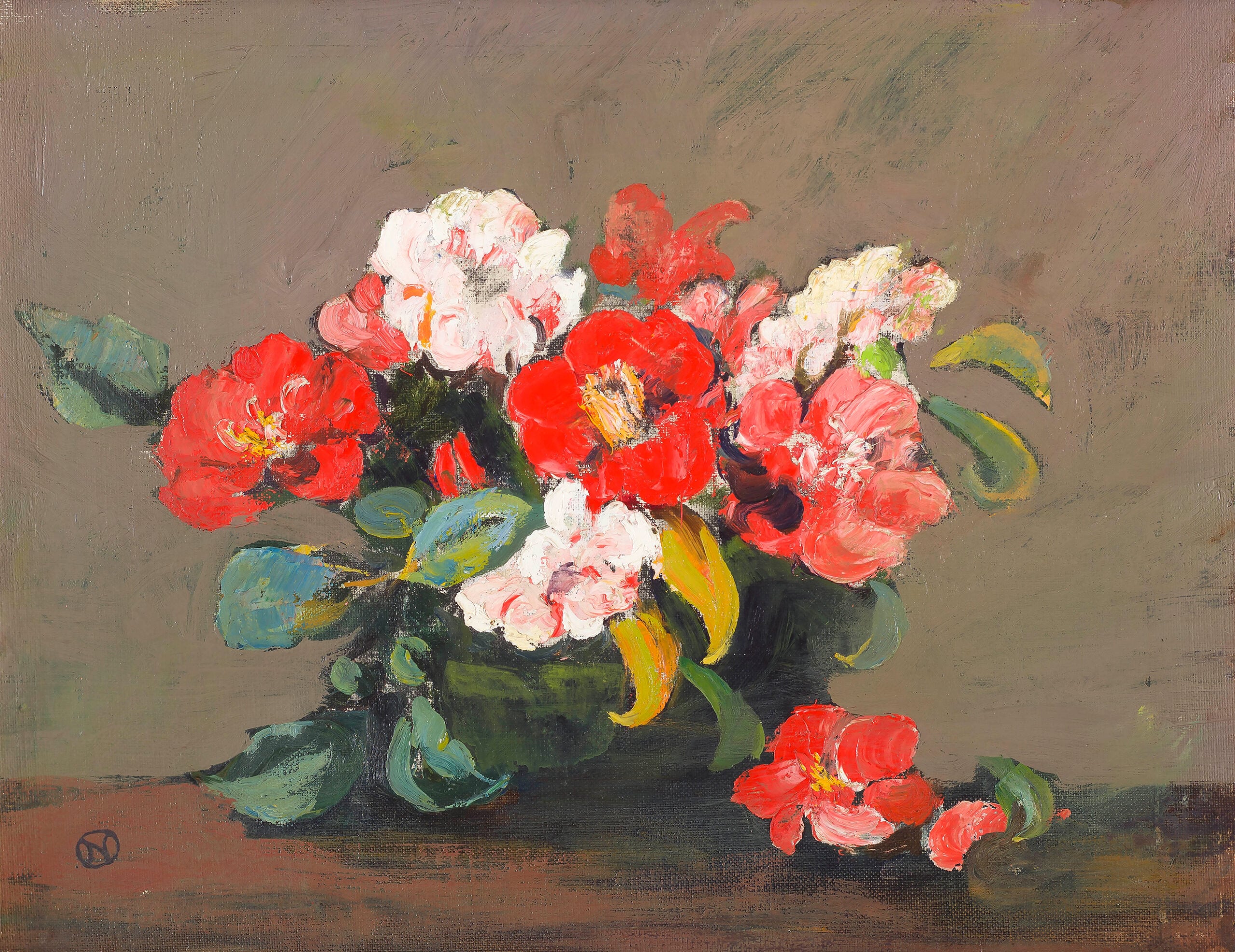
Spilhaus’s favourite subjects included Cape pine and oak trees, lush green scenery in and around Devil’s Peak, the Cape Malay Quarters, the cityscapes over Cape Town, scenes and people she observed while traveling. When the First World War broke out, she was confined indoors and started to take up flower-painting; later on, she became known for her still lifes that accurately depicted rich, colourful yet delicate flower bouquets.
Her first South African solo exhibition was held in Johannesburg in 1920 and soon after travelled to Munich, where she lived following her marriage. While abroad, she sent various works, including oil paintings, drawings, and etches, for group exhibitions at the Lezard’s Gallery in Johannesburg. Almost two decades later, she and her husband returned to the Cape, and she continued to exhibit locally. In the late 1950s, she moved to the Jonkershoek Valley in Stellenbosch, where she lived with her sister. After losing her sight, she returned to Cape Town, where she passed away in Rondebosch at the age of 89.
Although Spilhaus was not among the most prolific female South African artists, she was one of the earliest women to achieve commercial exhibition success in South Africa and became a prominent figure among female artists in the early 20th century.